Paraffin wax packaging plays an important role in product protection, handling efficiency, warehouse organization, and transportation.
For industrial buyers, packaging is not only about appearance. The correct packing system helps protect wax slabs from contamination, physical damage, excessive heat, moisture exposure, and handling problems during storage and shipment.
From individual wax slabs to cartons, pallets, and export loading, each stage should be planned according to the product grade, order size, destination, and customer requirements.
Why Paraffin Wax Packaging Matters
Paraffin wax is normally supplied as a solid industrial material that must pass through several handling stages before reaching the customer.
These stages may include:
- Production
- Cooling and solidification
- Slab formation
- Primary packing
- Carton packing
- Palletizing
- Warehouse storage
- Container loading
- International transportation
Proper paraffin wax packaging helps keep the product organized and protected throughout this chain.
Paraffin Wax Slab Packaging
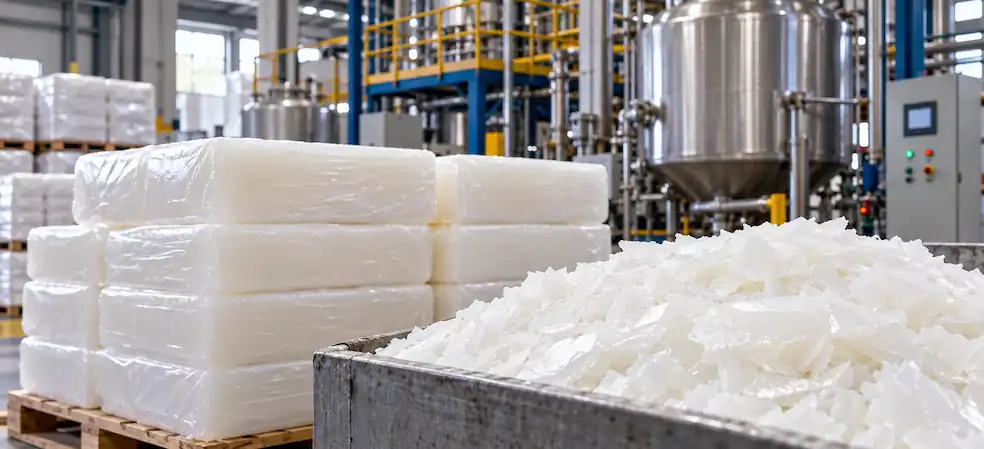
Industrial paraffin wax is commonly produced and handled in slab form.
After the wax is melted, processed, cooled, and solidified, it can be formed into manageable rectangular slabs suitable for industrial packaging and transportation.
The slab format provides several advantages:
- Easy manual and mechanical handling
- Efficient stacking
- Controlled package weight
- Convenient warehouse organization
- Efficient pallet loading
- Easy customer handling before melting
Wax slabs should remain clean and free from unnecessary contamination during the packaging process.
Primary Protection for Paraffin Wax
Before outer packaging is applied, wax slabs may require primary protection to help separate the product from the external environment.
Depending on the packaging system and customer requirements, this layer can help reduce direct contact with:
- Dust
- Dirt
- Warehouse surfaces
- Carton fibers
- Handling equipment
- Other external contaminants
The packaging materials selected should be appropriate for the wax grade and transportation conditions.
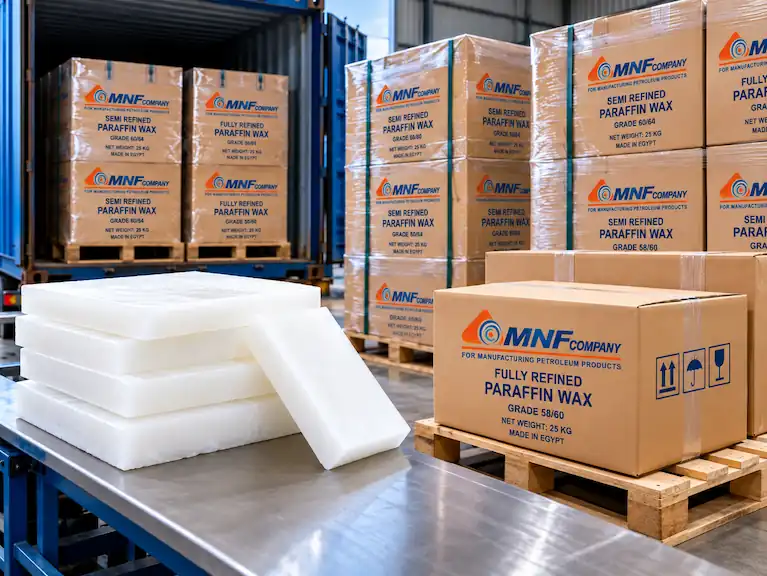
Paraffin Wax Carton Packaging
Cartons provide an important outer layer of protection and make industrial wax easier to store, count, stack, and transport.
A suitable industrial carton should provide enough strength to support the product during normal handling and stacking.
Carton packaging can help with:
- Product identification
- Protection during handling
- Warehouse organization
- Stacking efficiency
- Pallet preparation
- Transport planning
Information on Paraffin Wax Packaging
Clear package identification is important for industrial orders.
Depending on customer, regulatory, and commercial requirements, carton information may include:
- Product name
- Wax type
- Grade
- Net weight
- Country of origin
- Manufacturer information
- Batch or lot reference where applicable
This helps reduce confusion between different wax grades during warehousing and delivery.
MNF Paraffin Wax Grades and Packaging
MNF manufactures several paraffin wax grades for industrial applications.
Customers can review the available specifications through the MNF product range.
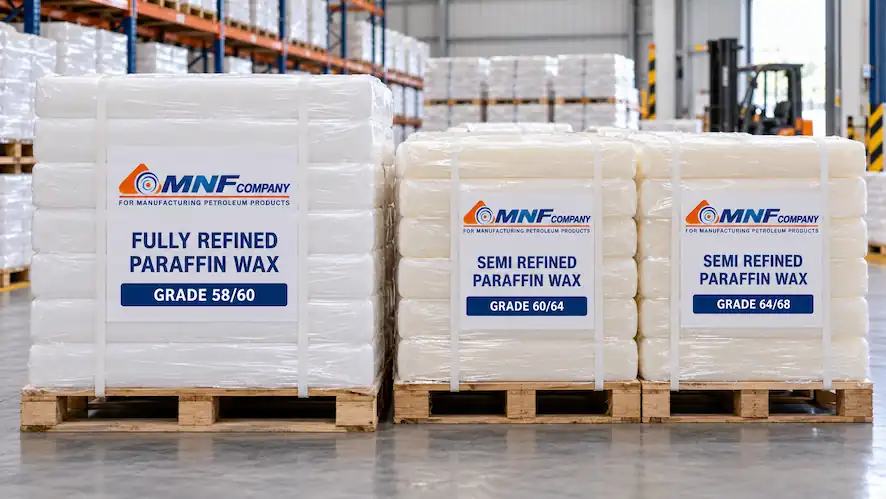
Fully Refined Paraffin Wax 58–60°C
The MNF Fully Refined Paraffin Wax 58–60°C is a more highly refined grade designed for industrial applications requiring controlled melting behavior and refined product characteristics.
Semi-Refined Paraffin Wax 60–64°C
The MNF Semi-Refined Paraffin Wax 60–64°C provides a medium melting range for various industrial applications.
Semi-Refined Paraffin Wax 64–68°C
The MNF Semi-Refined Paraffin Wax 64–68°C is intended for applications requiring a higher melting range.
Packaging requirements can be discussed according to product grade, order quantity, destination, and commercial requirements.
Paraffin Wax Palletizing
After cartons are prepared, they can be organized on pallets for more efficient industrial handling.
Palletizing is especially useful for larger orders because it allows cartons to be moved using forklifts and warehouse equipment.
Benefits of palletizing include:
- Faster loading and unloading
- Improved warehouse organization
- Reduced manual handling
- More stable unit loads
- Better use of storage space
- More efficient container loading
Stable Pallet Loading
Cartons should be arranged in a stable configuration that reduces unnecessary movement during handling and transportation.
Important considerations include:
- Balanced weight distribution
- Correct carton alignment
- Avoiding excessive pallet overhang
- Using suitable wrapping or securing methods
- Maintaining sufficient pallet stability
The final pallet configuration may vary according to carton dimensions, total order weight, transport method, and customer requirements.
Stretch Wrapping and Load Protection
Stretch wrapping can help stabilize cartons on a pallet and provide additional protection against dust and movement.
When properly applied, pallet wrapping may help:
- Keep cartons together
- Reduce movement during handling
- Protect outer cartons from dust
- Improve pallet stability
- Support safer warehouse handling
Wrapping should provide sufficient stability without damaging or excessively compressing the cartons.
Wooden Pallets for Export Shipments
Wooden pallets are widely used in international logistics.
For export shipments, buyers and suppliers should confirm the destination country’s requirements for wood packaging material.
ISPM 15 is the international standard covering phytosanitary measures for certain raw wood packaging materials used in international trade, including pallets and dunnage. :chatgpt-content-reference{index=”0″}
For more information, see the International Plant Protection Convention guidance on ISPM 15 .
Where applicable, export pallets should comply with the requirements of the destination country and the relevant shipping documentation.
Paraffin Wax Storage Conditions
Correct storage is important for maintaining product quality before shipment or production use.
Paraffin wax should generally be stored in a clean, dry, and suitable warehouse environment.
Keep Wax Away From Excessive Heat
Because paraffin wax is temperature-sensitive, storage areas should avoid unnecessary exposure to excessive heat.
High temperatures may soften the wax or affect slab shape and packaging stability.
Keep Packaging Dry
Cartons and pallet materials should be protected from unnecessary moisture exposure.
Wet or damaged cartons may lose strength, which can affect stacking and handling performance.
Protect Wax From Direct Sunlight
Long periods of direct sunlight can increase package temperature.
Covered indoor storage is generally preferable for packaged paraffin wax.
Maintain a Clean Warehouse
Clean storage conditions help reduce the risk of dust, dirt, odors, or other contaminants affecting packaged products.
Avoid Strong Odors and Contaminants
Wax should be stored away from chemicals, materials, or products that could create contamination or unwanted odors.
Stacking Paraffin Wax Cartons
Proper stacking helps maintain warehouse safety and protect product packaging.
Important factors include:
- Carton strength
- Pallet condition
- Total load weight
- Stack height
- Warehouse temperature
- Expected storage duration
Excessive stacking pressure may deform cartons or wax slabs, especially if products are exposed to elevated temperatures.
Warehouse operators should use a stacking configuration appropriate for the packaging system and site conditions.
Warehouse Handling of Paraffin Wax
Industrial wax orders may be handled several times before final delivery.
Careful warehouse handling helps protect both the product and its outer packaging.
Recommended practices include:
- Using suitable forklifts or pallet-handling equipment
- Avoiding impacts against cartons
- Avoiding punctures from forklift forks
- Keeping pallets level during movement
- Checking pallet stability before lifting
- Keeping transport and warehouse areas clean
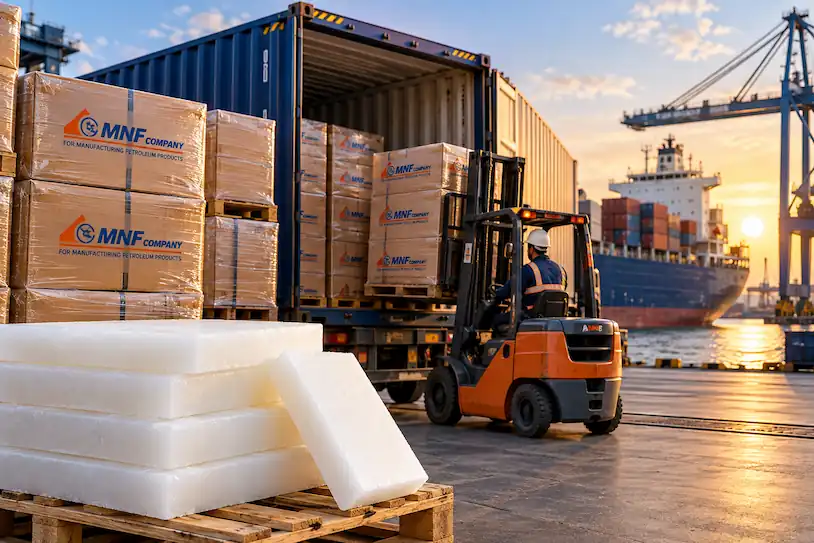
Preparing Paraffin Wax for Container Loading
Before loading export shipments, the packaging and cargo configuration should be reviewed.
Checks may include:
- Correct product grade
- Correct number of cartons
- Package condition
- Pallet condition
- Labels and product identification
- Load stability
- Container cleanliness
The container itself should be suitable for the cargo and should not introduce unnecessary contamination, water, or damage risks.
Container Loading and Space Efficiency
Efficient loading helps maximize available container space while maintaining safe cargo handling.
The correct arrangement depends on:
- Carton size
- Pallet size
- Total order quantity
- Container type
- Weight distribution
- Customer requirements
Good load planning aims to minimize excessive movement while keeping the cargo accessible and stable.
Packaging for Long-Distance Transportation
Export shipments may pass through trucks, ports, terminals, containers, warehouses, and other handling points before reaching the buyer.
For this reason, packaging should be selected with the complete transportation chain in mind.
Important risks can include:
- Repeated loading and unloading
- Vibration
- Carton compression
- Temperature exposure
- Moisture
- Movement inside the cargo unit
Suitable carton strength, pallet stability, wrapping, and loading practices can help reduce these risks.
Packaging Inspection Before Shipment
Before dispatch, a final visual inspection can help identify packaging issues.
Typical checks may include:
- Damaged cartons
- Broken pallets
- Loose wrapping
- Incorrect labels
- Unstable carton stacks
- Visible contamination
- Water exposure
Any damaged packaging should be evaluated before loading.
Choosing the Right Paraffin Wax Packaging
The most appropriate packaging system depends on the needs of the order.
Industrial buyers should consider:
Product Grade
Different wax grades may have different physical characteristics and handling requirements.
Order Quantity
Larger orders may require more structured palletizing and container planning.
Destination
International shipments may require additional export packaging considerations.
Transport Method
The packaging should be suitable for road, sea, or combined transportation.
Storage Duration
Longer storage periods may increase the importance of warehouse temperature, carton condition, and pallet stability.
Customer Handling System
Packaging can also be planned according to how the customer’s warehouse and production facility receive and handle raw materials.
Packaging and Product Traceability
Accurate product identification helps support traceability during warehousing and transportation.
Depending on the order system, package information can help connect the physical shipment with:
- Purchase orders
- Invoices
- Packing lists
- Batch information
- Certificates of Analysis
- Shipping documents
This can make receiving and inventory control easier for industrial customers.
Frequently Asked Questions About Paraffin Wax Packaging
How is paraffin wax packaged?
Paraffin wax can be prepared in solid slabs, protected with suitable primary packaging, packed into cartons, and organized on pallets for industrial handling and transportation.
Why is paraffin wax supplied in slabs?
Slabs are relatively easy to stack, pack, transport, store, and handle before the wax is melted for industrial use.
Can paraffin wax be palletized?
Yes. Palletizing is commonly used for larger industrial orders because it improves handling, storage, and loading efficiency.
How should paraffin wax be stored?
Packaged wax should generally be stored in a clean, dry environment away from excessive heat, direct sunlight, moisture, and contamination.
Can heat damage packaged paraffin wax?
Excessive heat may soften wax, affect slab shape, and reduce packaging stability. Appropriate storage and transportation conditions are therefore important.
Do wooden export pallets need special treatment?
Depending on the destination and type of wood packaging material, ISPM 15 requirements may apply to wooden pallets used in international trade.
Can packaging requirements vary between customers?
Yes. Packaging configuration may depend on the grade, order quantity, destination, shipping method, and customer’s commercial requirements.
Reliable Paraffin Wax Packaging for Industrial Supply
Good paraffin wax packaging supports product protection from the production line to the customer’s warehouse.
Slab preparation, cartons, palletizing, warehouse storage, wrapping, and container loading all contribute to safe and efficient industrial handling.
For export orders, packaging should also be planned around transportation conditions and destination requirements.
To discuss product grades, packaging requirements, quantities, or destination details, contact MNF for further information.