Paraffin wax shipping requires careful coordination between packaging, warehouse handling, container loading, documentation, freight planning, and final delivery.
For industrial buyers, the shipping process is an important part of the supply chain because poor handling or documentation can create delays, product damage, additional costs, or receiving problems at destination.
A well-planned export shipment should protect the product, maintain cargo stability, and provide the documents needed for customs clearance and commercial delivery.
Paraffin Wax Shipping for Industrial Orders
Industrial paraffin wax orders may move through several stages before reaching the customer.
A typical shipping process can include:
- Order confirmation
- Product preparation
- Packaging
- Palletizing
- Warehouse handling
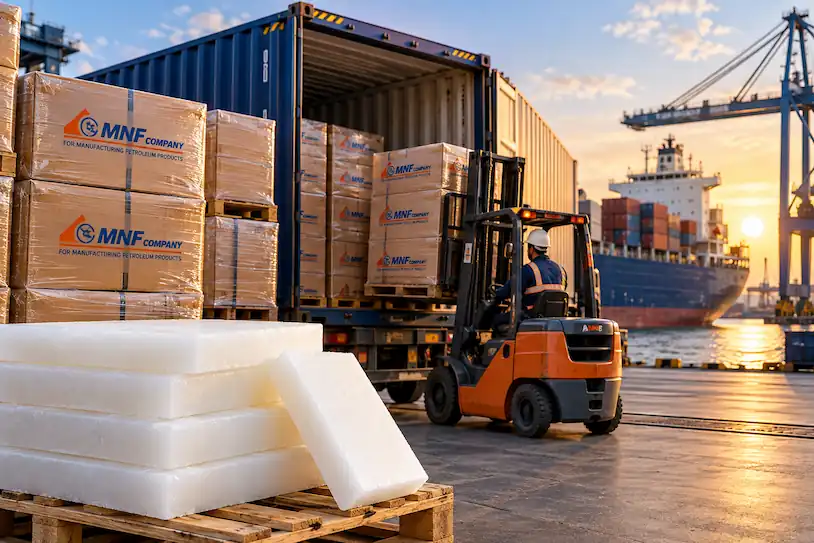
- Container loading
- Export documentation
- Port handling
- Sea transportation
- Import clearance
- Final delivery
Each stage should be coordinated according to the wax grade, shipment size, destination, and customer requirements.
Preparing Paraffin Wax Before Shipping
Before a shipment is dispatched, the product should be prepared and checked against the confirmed order.
Typical checks may include:
- Correct paraffin wax grade
- Correct package quantity
- Correct net weight
- Package condition
- Label accuracy
- Pallet stability
- Batch identification where applicable
These checks help reduce the risk of shipment errors before the cargo leaves the warehouse.
Packaging for Paraffin Wax Export
Packaging should be suitable for both industrial handling and long-distance transportation.
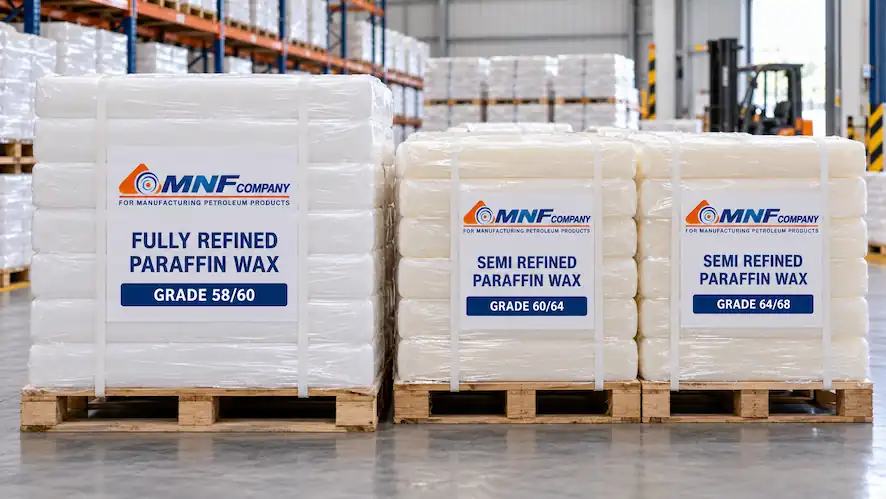
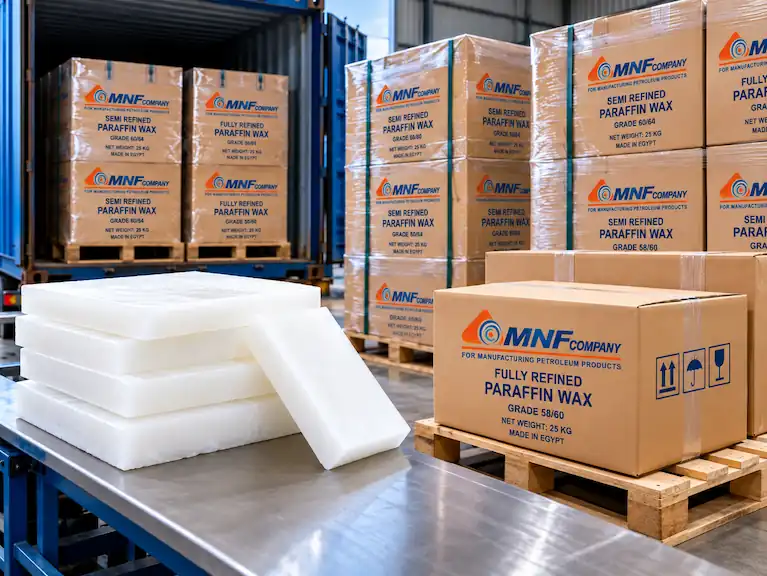
Paraffin wax may be supplied in solid slabs packed in cartons and organized on pallets for efficient movement and loading.
Suitable packaging can help protect against:
- Dust
- Physical damage
- Carton movement
- Handling impacts
- Moisture exposure
- Contamination
For more detail about packing and storage, see the MNF paraffin wax packaging and storage guide.
Paraffin Wax Pallet Handling
Palletized cargo can improve warehouse and transport efficiency by allowing cartons to be moved using forklifts and other handling equipment.
Before shipment, pallets should be checked for:
- Structural condition
- Stable carton arrangement
- Balanced load distribution
- Secure wrapping or strapping
- Correct product identification
Damaged or unstable pallets should be corrected before container loading.
Container Loading for Paraffin Wax
Container loading is one of the most important stages in paraffin wax shipping.
The cargo should be arranged to use the available space efficiently while maintaining stability during transportation.
Check Container Condition
Before loading, the container should be inspected for suitability.
Checks may include:
- Clean interior
- Dry floor and walls
- No visible water leakage
- No strong unwanted odors
- No major structural damage
- Doors operating correctly
A clean and suitable container helps reduce contamination and cargo damage risks.
Distribute Weight Correctly
Cargo should be loaded with balanced weight distribution according to the container and transportation requirements.
Uneven loading can affect cargo stability and handling.
Reduce Cargo Movement
Cartons and pallets should be arranged to reduce unnecessary movement during transport.
Depending on the loading configuration, suitable securing methods may be used to help stabilize the cargo.
International Guidance for Container Packing
The IMO/ILO/UNECE Code of Practice for Packing of Cargo Transport Units, commonly known as the CTU Code, provides international guidance for the packing and securing of cargo in containers and other cargo transport units.
The guidance addresses issues including cargo distribution, securing, handling, and safe packing across sea and land transportation.
Read the official UNECE CTU Code guidance.
Paraffin Wax Shipping Documents
Export shipments normally require a set of commercial and logistics documents.
The exact documentation can vary according to destination country, customer requirements, payment terms, shipping method, and applicable regulations.
Commercial Invoice
The commercial invoice usually provides information such as:
- Seller information
- Buyer information
- Product description
- Quantity
- Unit price
- Total value
- Currency
- Commercial terms
Packing List
The packing list provides information about how the shipment is physically packed.
It may include:
- Number of packages
- Net weight
- Gross weight
- Pallet quantity
- Package dimensions
- Product grade
Bill of Lading
For sea freight, the Bill of Lading is an important shipping document issued in connection with the transportation of the cargo.
It typically identifies the shipper, consignee, cargo, shipment route, and transport details.
Certificate of Origin
A Certificate of Origin may be required to confirm the country in which the goods originate.
The required format depends on the destination and applicable trade requirements.
Certificate of Analysis
A Certificate of Analysis, or COA, provides laboratory results for a specific production batch.
For paraffin wax buyers, the COA can help confirm properties such as:
- Melting point
- Oil content
- Viscosity
- Penetration
- Color
- Congealing point
Technical Data Sheet
The Technical Data Sheet, or TDS, describes the target product specification and helps buyers compare the grade with their application requirements.
TDS vs COA in Export Shipments
Both documents can be useful, but they serve different purposes.
TDS = target product specification
COA = actual test results for a specific batch
Industrial buyers should review the applicable product specification before ordering and confirm batch documentation where required.
MNF Paraffin Wax Grades for Export
MNF manufactures fully refined and semi-refined paraffin wax grades for industrial customers.
Fully Refined Paraffin Wax 58–60°C
View the
MNF Fully Refined Paraffin Wax 58–60°C
.
Semi-Refined Paraffin Wax 60–64°C
View the
MNF Semi-Refined Paraffin Wax 60–64°C
.
Semi-Refined Paraffin Wax 64–68°C
View the
MNF Semi-Refined Paraffin Wax 64–68°C
.
Customers can also explore the complete MNF paraffin wax product range.
Choosing the Right Shipping Method
The most suitable shipping method depends on order size, destination, lead time, and commercial requirements.
Sea Freight
Sea freight is commonly used for larger international industrial shipments.
It can provide an efficient solution for containerized cargo moving between export and destination ports.
Road Transportation
Road transport may be used for movement between the manufacturing facility, warehouse, port, customer location, or regional destination.
Combined Transport
Some shipments may use more than one transport mode, such as road transportation combined with sea freight.
Planning should consider the entire logistics chain rather than only one stage.
Full Container Load and Shipment Planning
For larger orders, container planning can help optimize logistics efficiency.
Factors to consider include:
- Total cargo weight
- Number of cartons
- Pallet configuration
- Container dimensions
- Weight distribution
- Destination restrictions
- Customer unloading method
The final loading plan should remain within applicable container and transport limits.
Temperature Considerations During Paraffin Wax Shipping
Paraffin wax is temperature-sensitive.
During shipping and storage, unnecessary exposure to excessive heat should be avoided because high temperatures can soften wax and affect slab shape or packaging stability.
Important considerations include:
- Seasonal temperature
- Route
- Storage duration
- Container exposure
- Port waiting time
- Destination climate
Shipping planning should take the product’s melting range and packaging configuration into account.
Moisture and Container Cleanliness
Although solid paraffin wax is packed for industrial transport, the outer packaging can still be affected by poor container conditions.
Moisture can weaken cartons and affect pallet stability.
For this reason, the loading area and transport unit should be checked before loading.
Shipment Identification and Traceability
Accurate identification helps connect the physical shipment with its commercial and technical documents.
Traceability information may include:
- Product grade
- Order reference
- Batch reference
- Package quantity
- Shipping documents
- Certificate of Analysis
Clear identification can simplify receiving and warehouse control at destination.
Export Requirements Can Vary by Destination
Import and export requirements are not identical in every market.
Depending on the destination, buyers and suppliers may need to confirm:
- Customs documentation
- Certificate requirements
- Product labeling
- Wood packaging requirements
- Import registration requirements
- Local standards
These requirements should be confirmed for the specific destination before shipment.
Communication Between Supplier and Buyer
Clear communication before shipment can prevent many logistics issues.
Buyers should provide accurate information about:
- Required wax grade
- Order quantity
- Destination
- Preferred packaging
- Required documentation
- Delivery requirements
This allows the supplier to prepare the order and shipment more effectively.
Paraffin Wax Shipping Checklist
Before shipment, it is useful to confirm the following:
- Correct product grade
- Correct quantity
- Packaging condition
- Pallet stability
- Container condition
- Commercial invoice
- Packing list
- Bill of Lading requirements
- Certificate of Origin where required
- TDS and COA requirements
- Destination requirements
Frequently Asked Questions About Paraffin Wax Shipping
How is paraffin wax shipped internationally?
Industrial paraffin wax may be packed in slabs and cartons, palletized, loaded into suitable containers, and transported through road and sea freight according to the destination and order requirements.
What documents are needed for paraffin wax export?
Common documents may include a commercial invoice, packing list, Bill of Lading, Certificate of Origin, Technical Data Sheet, and Certificate of Analysis. Exact requirements vary by shipment and destination.
Can paraffin wax be shipped in containers?
Yes. Containerized transportation is commonly used for international industrial shipments.
Does paraffin wax require special storage during shipping?
Packaged paraffin wax should be protected from excessive heat, contamination, and unnecessary moisture exposure.
Why is container inspection important?
A clean, dry, structurally suitable container helps reduce risks related to contamination, moisture, cargo movement, and package damage.
What information should buyers provide before ordering?
Buyers should provide the required product grade, quantity, application, destination, packaging requirements, and requested documentation.
Reliable Paraffin Wax Shipping and Export Support
Successful paraffin wax shipping depends on more than transportation alone.
Packaging, palletizing, cargo handling, documentation, container preparation, and logistics planning all contribute to a reliable export process.
By preparing these elements correctly, suppliers and buyers can reduce delays, improve cargo protection, and simplify receiving at destination.
If you are planning an industrial paraffin wax order, contact MNF with your required grade, quantity, destination, and shipping requirements.